Smart Eco-Compactor with AI, Smart Eco-Compactor with AI,
Smart Eco-Compactor with AI
/SWIch Call for Proposals: HumanOps
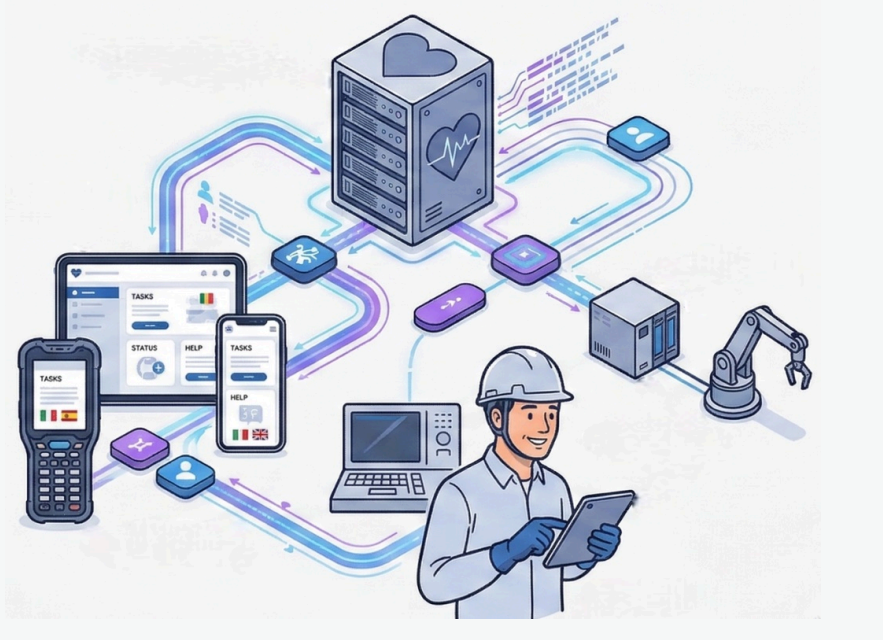
The paradigm of modern industry is finally changing: with the HumanOps Project (Human-Centered Operational Ecosystem for Advanced Manufacturing), it is no longer the operator who must adapt to the physical and cognitive limitations of the factory, but rather the intelligence of production and warehouse systems that adapts to the human operator.
Despite major advances in automation, many industrial environments still face challenges related to cognitive overload, safety, and complex or inaccessible human-machine interfaces. HumanOps was created to revolutionize this landscape, fully embracing theIndustry 5.0 paradigm. Through a unified and centralized digital architecture, the project aims to improve workplace efficiency and safety while reducing physical and mental strain.
The goal is to create a barrier-free factory. Wearable sensors, augmented reality, artificial intelligence, and computer vision systems work together synergistically to support operators in real time, making technology a tool for human empowerment that is inclusive and accessible to everyone, regardless of language or physical barriers.
Reference Call for Proposals
SWIch Call for Proposals – Piedmont Regional Program, ERDF 2021–2027 (Priority I, RSO1.1., co-financed by the European Union).
The project is scheduled to begin on January 16, 2026, with an estimated duration of 24 months and completion expected on January 16, 2028.
The Heart of the System: Centralized Intelligence
In the HumanOps Project, decision-making logic is not scattered but resides in centralized software on a dedicated PC, while PLCs serve merely as executors. This enables a responsive, multilingual universal interface (PWA web app), designed to reduce training time and facilitate immediate use from day one.
Natural Interaction: Voice and Gestures Take Command
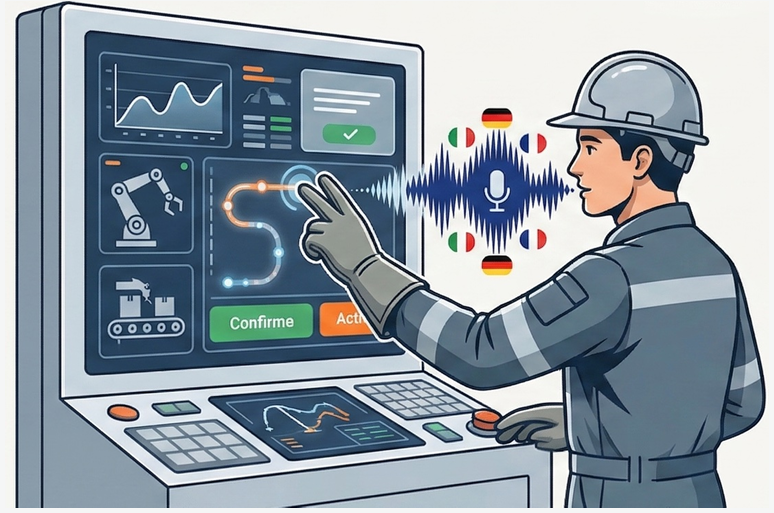
No more complex interfaces. The system allows users to issue commands to machines via precise gestures detected by cameras, without the operator having to remove gloves or Personal Protective Equipment (PPE). In low-noise environments, multilingual voice commands are also available, ensuring smooth and natural operation.
Total Safety and Accessibility: An Inclusive Factory
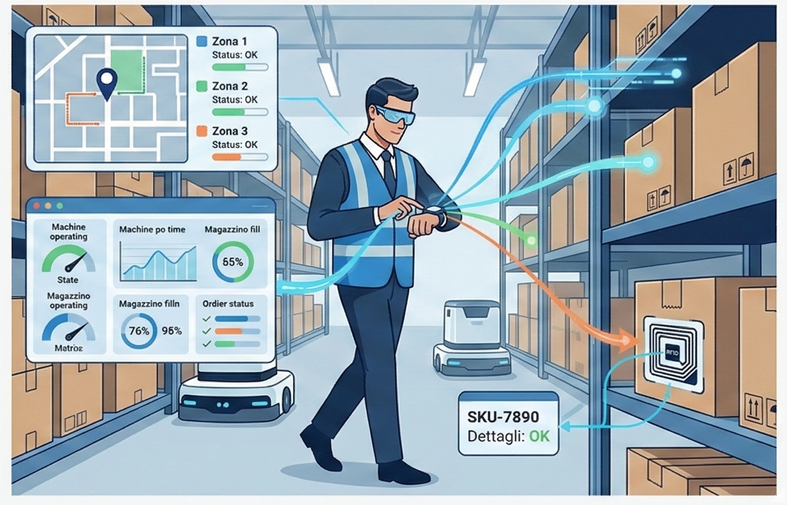
Safety is a top priority: the use of vibrating wristbands enables silent and immediate alerts. In addition, RFID recognition ensures that only authorized personnel can access specific areas. The ecosystem’s design overcomes physical and sensory barriers, offering high-contrast display modes for people with color blindness and reducing unnecessary movement, thereby also assisting operators with mobility challenges.
Augmented Reality and Wearables: Information Where It’s Needed
Workers are equipped with wrist-worn terminals that ensure total mobility and real-time data monitoring (e.g., inventory status). Furthermore, the use of head-up displays and augmented reality revolutionizes training and maintenance: visual prompts guide the operator without halting production, while a remote expert can overlay arrows and spatial cues anchored to the on-site technician’s field of view.